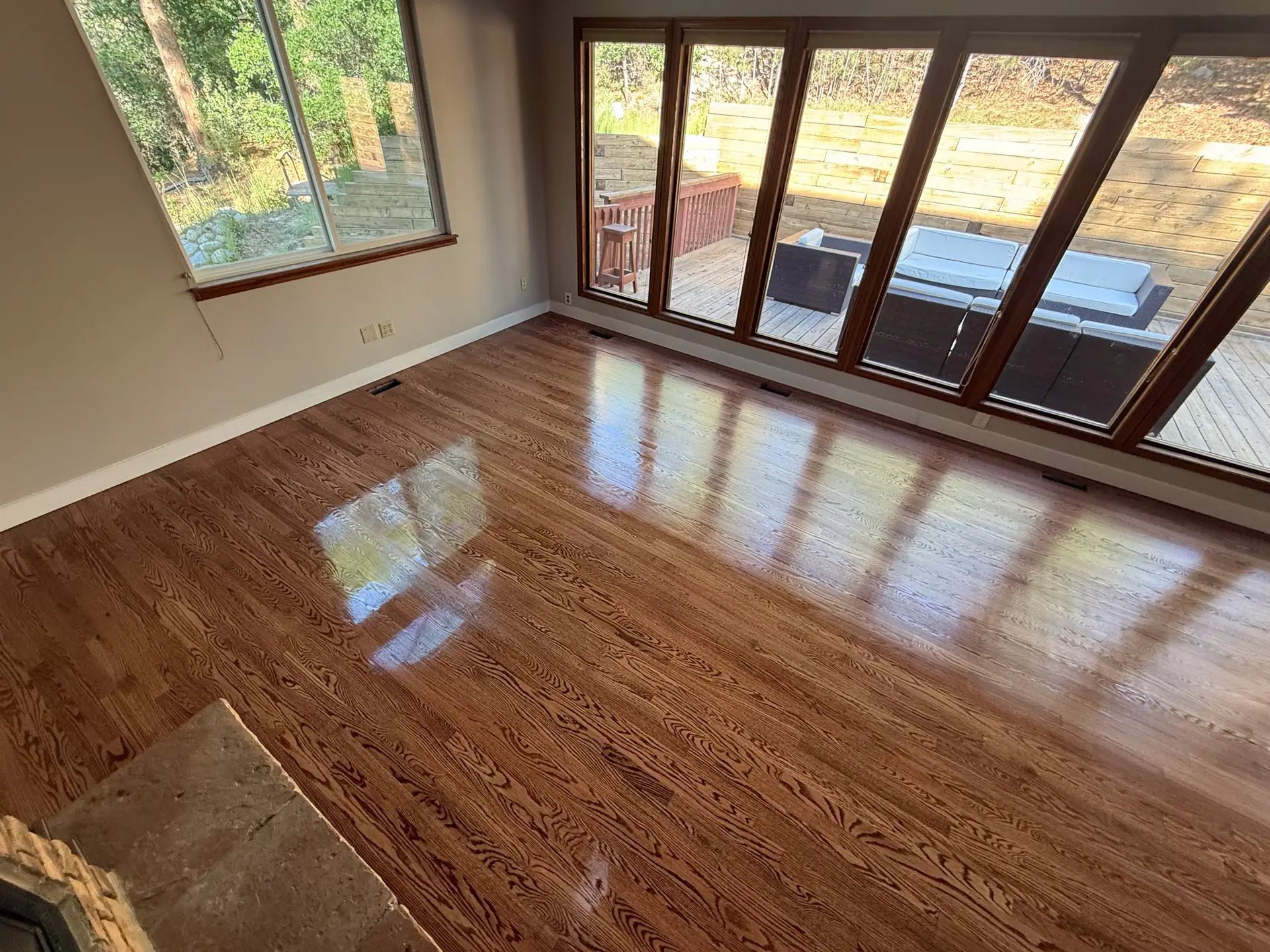

Choose flooring for the room and the specific product’s requirements. Colorado’s dry seasons make indoor conditions worth discussing, but no material category is automatically suitable for every home.
When planning a floor in Boulder or the Front Range, start with how the space is used. A bedroom, kitchen, bathroom, and basement have different needs. Note water exposure, sunlight, the surface underneath the existing floor, and whether indoor heating or cooling varies through the year.
Understanding Colorado’s Climate Challenges
Wood can shrink as it loses moisture and expand as it gains moisture. Maintain the indoor conditions required by the flooring manufacturer, and discuss moisture checks and acclimation with your installer. Outdoor weather alone does not tell you the humidity inside your home. The National Wood Flooring Association’s moisture-management guidance explains why stable conditions matter.
Tell your installer about known leaks, seasonal gaps, direct sunlight, and rooms over slabs or basements. Check product limits for temperature and sunlight as well as moisture.
Flooring Options for Colorado Homes
Engineered Hardwood
Engineered wood has a real wood surface over a layered structure. It generally moves less with moisture changes than solid wood, but still needs suitable indoor conditions and an approved installation method. Refinishing depends on the wear layer, previous sanding, and condition. Radiant-heat compatibility must be confirmed for the exact product. Read more about hardwood flooring installation and the NWFA’s wood-floor types.
Luxury Vinyl Plank (LVP)
Luxury vinyl offers wood-inspired finishes in several constructions and installation systems. Review the product’s permitted rooms, sunlight and temperature limits, and required expansion space. A waterproof flooring label does not make the subfloor or the whole room waterproof. Moisture beneath the floor still needs assessment. Explore our luxury vinyl installation guide.
Laminate Flooring
Laminate provides a decorative wear surface over a layered core. Water resistance, cleaning requirements, and permitted installation locations vary by product. Confirm the underlayment, subfloor requirements, and spill-cleanup instructions before ordering. Laminate cannot be sanded and refinished like wood; retain spare boards for possible repairs. Compare laminate flooring options.
Other Flooring Materials to Consider
- Solid hardwood: can be suitable when the location, installation, and indoor environment meet the product’s requirements.
- Tile: consider the substrate, movement, surface suitability, and any required waterproofing. Tile and grout alone do not form a waterproof assembly.
- Carpet: compare construction, cushion, traffic, and cleaning needs. Assess any moisture issue before installing carpet or another covering.
Our tile and carpet guides explain the planning details for each.
Professional Installation Makes the Difference
Discuss removal, surface preparation, moisture checks, transitions, stairs, and manufacturer requirements as part of the estimate. Acclimation should follow the chosen product’s instructions and site conditions. Underlayment is part of an installation system; it does not replace indoor climate control or resolve an existing leak.
Making Your Decision
Compare samples in your own lighting, then compare the full project scope and care requirements. Caveman Flooring serves Boulder, Broomfield, Westminster, Denver, and Castle Rock. Get a free quote and discuss a floor that fits your space, daily use, and budget.