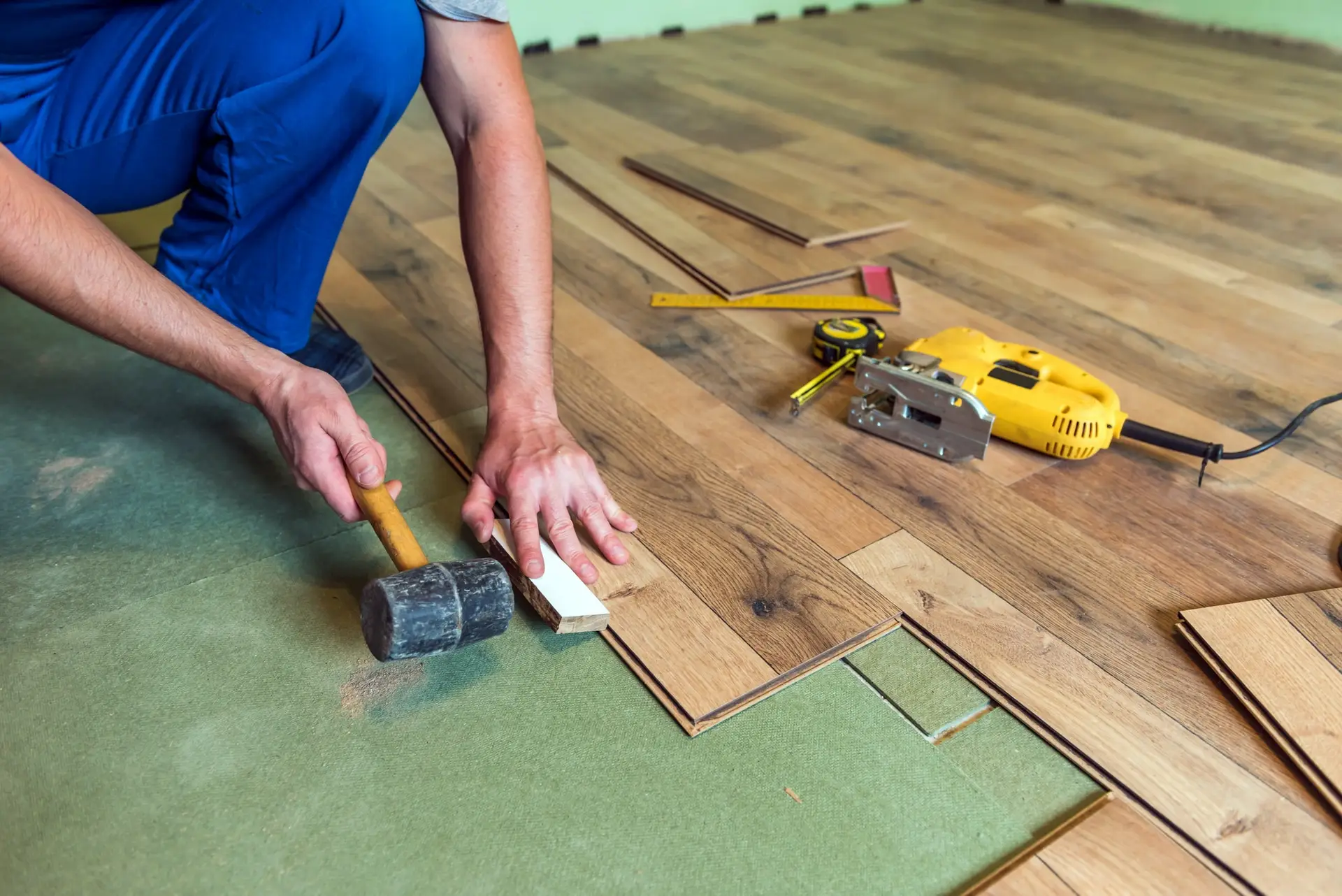
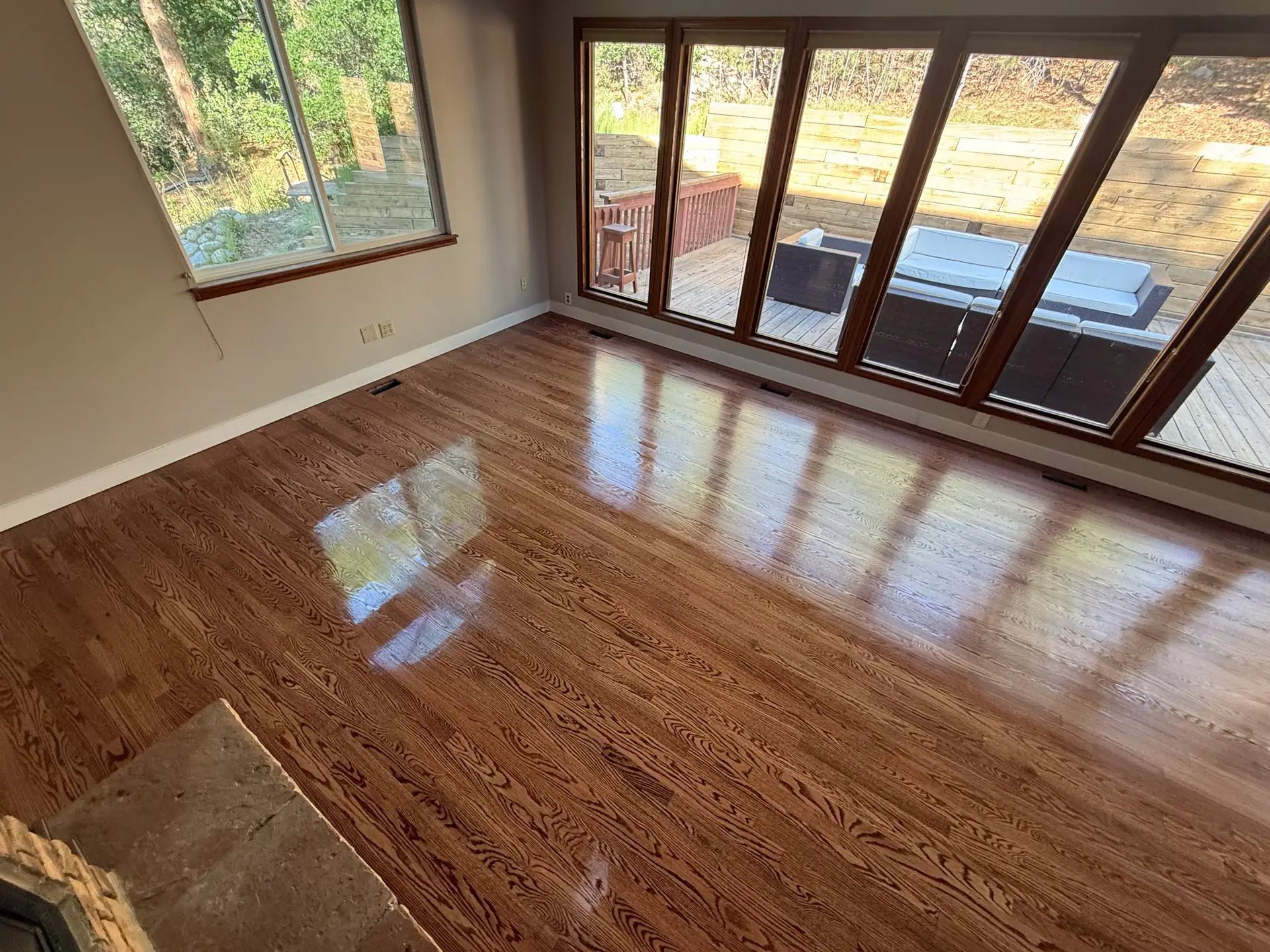
Hardwood can work well in a Colorado home when the product, installation, and indoor environment are planned together. Choose for your room’s conditions first, then narrow down the color and board width.
Shopping for hardwood flooring in Boulder often starts with a sample. A better starting point is the room: where it sits in the house, what is underneath the existing floor, and how the indoor environment changes through the year. Those details help determine which wood products and installation methods are suitable.
Solid or engineered: what is the difference?
Both can have a real wood wearing surface. Solid flooring is made from a single piece of wood, while engineered flooring uses a layered construction. The National Wood Flooring Association explains that engineered flooring generally moves less with changes in moisture. That does not make every engineered product suitable for every room. Check the product’s permitted locations and installation instructions. See the NWFA’s guide to wood-floor types.
Ask about the surface wear layer if future refinishing matters to you. “Engineered” alone does not tell you how much wood can be safely removed during sanding. A floor’s construction and condition need to be evaluated before refinishing is recommended.
Why indoor conditions deserve attention
Wood responds to moisture in its environment. Dry conditions can cause it to lose moisture and shrink; more humid conditions can cause it to gain moisture and expand. Keep the home within the flooring manufacturer’s recommended conditions, and discuss acclimation and moisture assessment before installation. A fixed number of days sitting in the house is not a substitute for checking the actual conditions. The NWFA explains moisture-related changes and prevention.
For a Front Range project, tell your installer whether the room is over a basement, on a concrete slab, or above another living area. Mention any known leaks, prior water damage, or long periods when the home is unoccupied. These facts are more useful than choosing a product based only on a general climate label.
Four decisions to make before ordering
- Connected rooms: decide where the new floor begins and ends and how it will meet existing material.
- Appearance: view samples in the room’s daylight and evening light, alongside cabinets and trim.
- Finishing: compare factory-finished products with site-finishing options and discuss access during the work.
- Preparation: clarify removal, subfloor work, trim, transitions, and stair details in the estimate.
When comparing quotes, make sure they describe the same work. A lower installation figure may leave out removal or preparation. Our flooring estimate checklist helps organize that conversation.
Do existing wood floors need replacing?
Not always. Surface wear may be a reason to explore hardwood refinishing, while localized damage may call for a repair. Movement or moisture concerns should be assessed before cosmetic work. Photos are helpful for an initial discussion, but the remaining wear layer and underlying conditions often require an in-person look.
Plan your Front Range hardwood project
Caveman Flooring serves Boulder, Broomfield, Westminster, Denver, and Castle Rock. Send the rooms involved, your city, a few photos, and your preferred look. We can discuss the next step and prepare a project-specific estimate. Request a free hardwood flooring estimate.