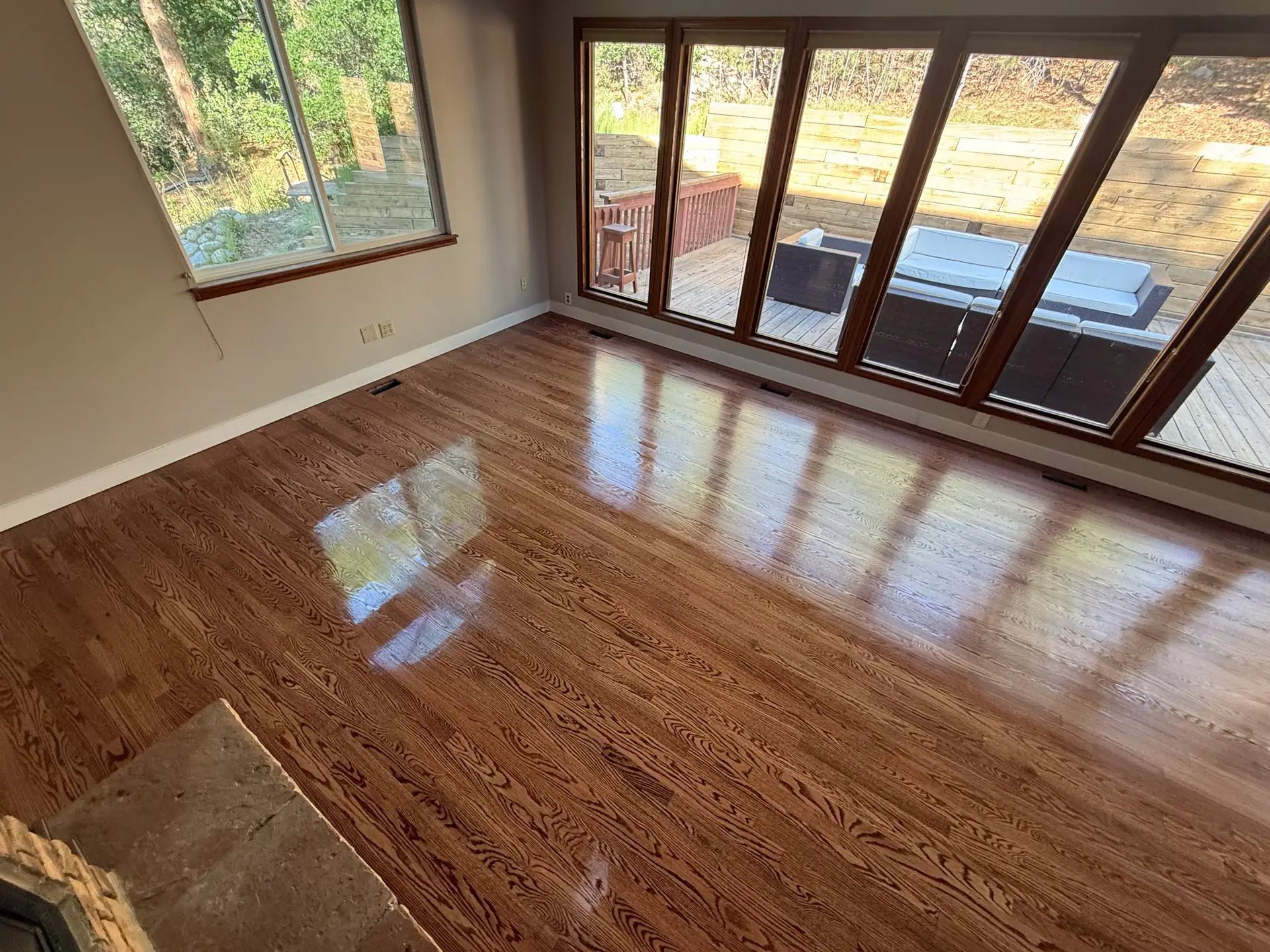
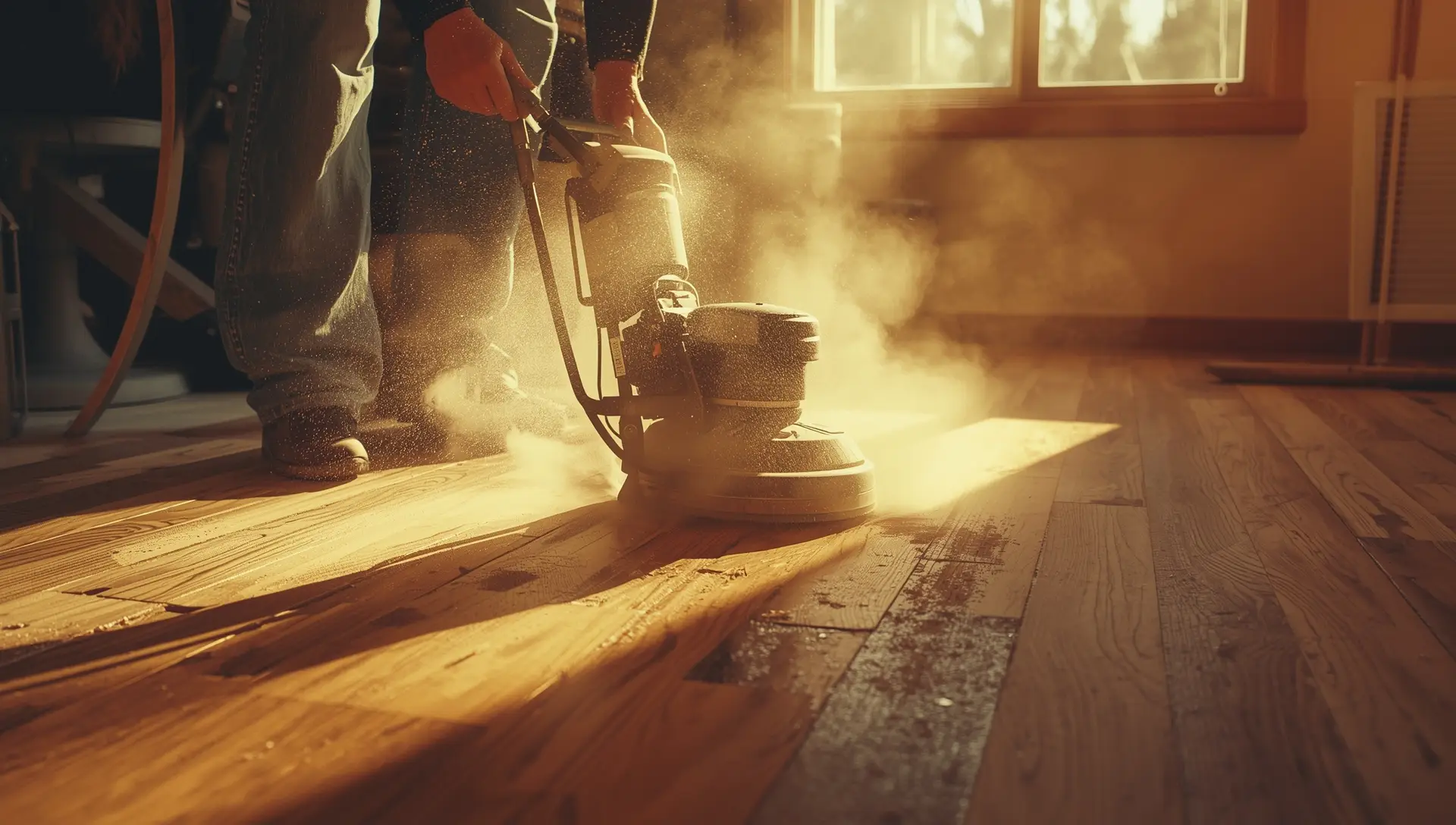
Visible wear is a reason to assess a wood floor. The right treatment may be cleaning, recoating, sanding and refinishing, or repairs. Moisture and movement problems need attention before cosmetic work begins.
A hardwood floor can change gradually with everyday use. Before choosing a treatment, consider its construction, remaining wear layer, previous sanding, and the condition beneath the finish. These seven signs can help you explain the problem when you contact Caveman Flooring.
Sign #1: Surface Scratches and Visible Wear
Fine scratches in the finish and deep damage to the wood are different problems. A compatible maintenance coat may help some worn finishes; deeper scratches can require sanding or localized repairs. Let the team assess the existing coating and any cleaning products used on it before recommending a treatment.
Sign #2: Dull or Faded Appearance
Dullness does not automatically mean the floor needs a full sanding. Residue, cleaning methods, and finish wear can affect its appearance. The National Wood Flooring Association explains the difference between a maintenance coat and a complete sand and refinish. Start with an assessment of the finish and the floor beneath it.
Sign #3: Sun Fading or Discoloration
Areas under rugs or furniture may age differently from exposed flooring. Discuss the likely result before selecting a stain or finish: sanding cannot guarantee that every color difference will disappear. Viewing samples on the actual floor can help set expectations.
Sign #4: Water Stains, Rings, or Light Damage
Discoloration may affect the finish, the wood, or both. Stop any ongoing moisture source and have the extent of damage assessed first. Some marks may improve with refinishing; deeper stains or damaged boards may require replacement. Share when the damage appeared and whether there was a leak or spill.
Sign #5: Splinters or Rough Spots
Rough or splintering areas deserve attention. The cause and remaining wood thickness help determine whether a repair, sanding, or board replacement is appropriate. Point out the affected areas and avoid assuming a new coat of finish will solve damaged wood.
Sign #6: Cupping or Uneven Boards
Cupping can signal a moisture imbalance. Have the cause investigated and corrected before deciding whether sanding is suitable. Sanding while the wood is still changing can leave an uneven result after conditions stabilize. The NWFA describes moisture-related cupping, gaps, and prevention. A flooring assessment should consider both the boards and their environment.
Sign #7: A Worn Finish After Years of Use
There is no single refinishing deadline for every floor. Traffic, care, finish, wear layer, and prior sanding affect the decision. Schedule an assessment when protection is wearing thin or wood is exposed; a floor in good condition should not be sanded simply because a certain number of years has passed. Follow the manufacturer’s care instructions between assessments.
Restore Your Floors’ Natural Beauty
Bring photos, the flooring product details if available, and a history of repairs or water exposure. We can discuss hardwood refinishing and floor repair for your Boulder or Front Range home. Get a free quote based on your floor’s actual condition.